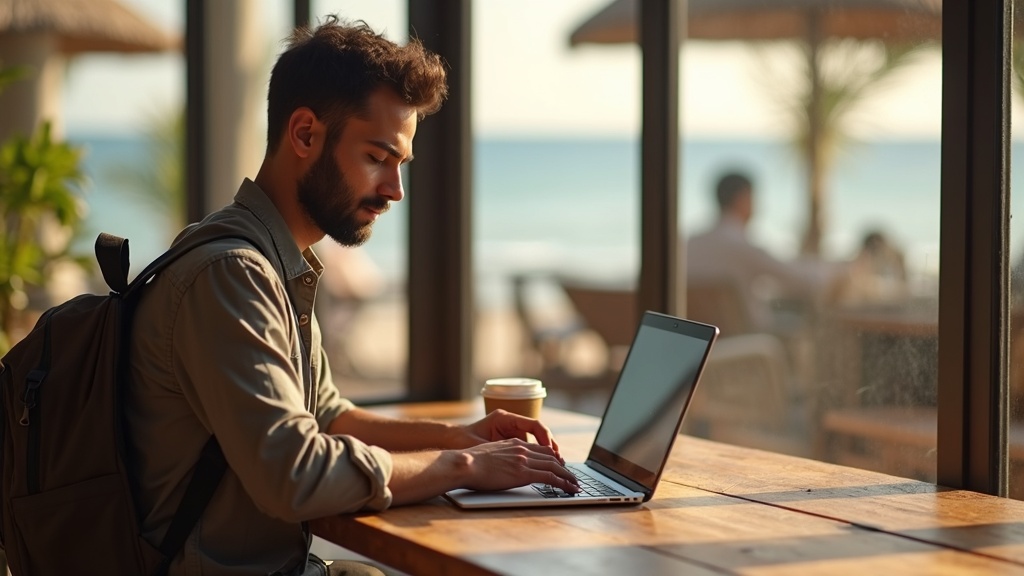
Working remotely from a beach in Bali or a café in Berlin sounds dreamy—until you realize public Wi-Fi networks are a hacker’s playground. In 2025, digital nomads and remote workers face more cyber threats than ever, from data snooping to geo-restrictions blocking essential tools. A VPN isn’t just a luxury; it’s your first line of defense, encrypting your connection and masking your location so you can work securely from anywhere. Here’s why skipping one could cost you more than just productivity.
Why Digital Nomads Can’t Afford to Skip a VPN in 2025
Remote work is booming, but so are cyberattacks. A 2024 report found that 43% of data breaches targeted remote workers, often through unsecured networks. Without a VPN, you’re broadcasting sensitive data—client details, login credentials, even financial info—to anyone lurking on the same Wi-Fi. Here’s what’s at stake:
- Public Wi-Fi risks: Coffee shop networks are prime targets for “man-in-the-middle” attacks.
- ISP tracking: Your internet provider logs your activity and could throttle speeds or sell data.
- Geo-blocks: Need to access your home country’s banking app or work tools? Many services restrict access abroad.
Best VPN This Month for Nomads
NordVPN tops our list with military-grade encryption, lightning-fast speeds, and 5,800+ global servers to bypass restrictions seamlessly.
Key Benefits of a VPN for Remote Work
1. Bank-Level Security on Any Network
A VPN encrypts your internet traffic, turning it into unreadable code even if intercepted. Whether you’re sending contracts or processing payments, your data stays private. Look for providers with AES-256 encryption (the same standard used by governments).
2. Access Work Tools Anywhere
Many companies restrict logins to specific regions. A VPN lets you appear local by connecting to a server in your home country. For example, ExpressVPN reliably unblocks Slack, Google Workspace, and even VoIP services like Zoom in restrictive countries.
3. Avoid Bandwidth Throttling
ISPs often slow speeds during high-usage activities (like video calls). A VPN hides your traffic type, preventing artificial slowdowns—critical for nomads relying on mobile hotspots.
Choosing the Right VPN: 2025 Must-Haves
Not all VPNs are built for nomadic lifestyles. Prioritize these features:
- No-logs policy: Ensure the provider doesn’t store your activity data (verified by independent audits).
- Server spread: 50+ countries to bypass geo-blocks and reduce latency.
- Device compatibility: Apps for laptops, phones, and routers (to protect all connected devices).
| VPN | Best For | Server Count |
|---|---|---|
| Surfshark | Budget-friendly multi-device use | 3,200+ |
| Proton VPN | Privacy-focused users | 2,900+ |
Real-World Risks: What Happens Without a VPN?
In 2024, a freelance developer lost $12,000 after hackers intercepted an invoice sent over hotel Wi-Fi. Another nomad faced legal trouble in Dubai for accidentally accessing a restricted news site. A VPN could’ve prevented both scenarios by:
- Encrypting financial transactions.
- Masking IP addresses to avoid local censorship laws.
Getting Started Is Easier Than You Think
Modern VPNs require zero tech skills. Download an app, click connect, and you’re protected in seconds. For added safety, enable the kill switch (cuts internet if the VPN drops) and split tunneling (choose which apps use the VPN).
Your nomadic freedom shouldn’t come at the cost of security. With cyber threats evolving yearly, a VPN is as essential as your laptop in 2025. NordVPN offers a risk-free 30-day trial—ideal for testing on the go. Stay safe, stay unrestricted, and keep working seamlessly from every corner of the globe.





Join the discussion
Have a question or a fix to add? Share it below.